
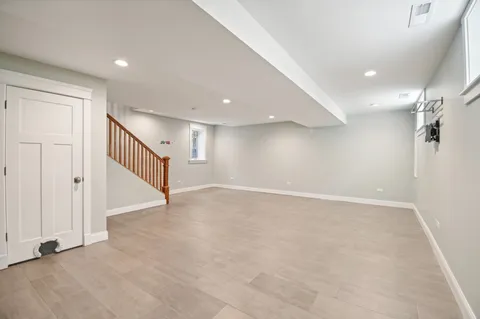
Introduction
You’ve walked past that door a hundred times. Maybe it leads to bare concrete walls and a single bulb on a pull chain. Maybe it’s a storage graveyard where holiday decorations go to be forgotten. Maybe it’s technically “finished” but in a 1990s kind of way that doesn’t do anyone any favors.
Whatever’s down there right now, one thing is almost certainly true: it’s the most underutilized square footage in your home. And in Evanston, where homes are priced by the foot and livable space is worth real money, leaving a basement unfinished or underperforming isn’t just a missed opportunity. It’s a cost you’re already absorbing.
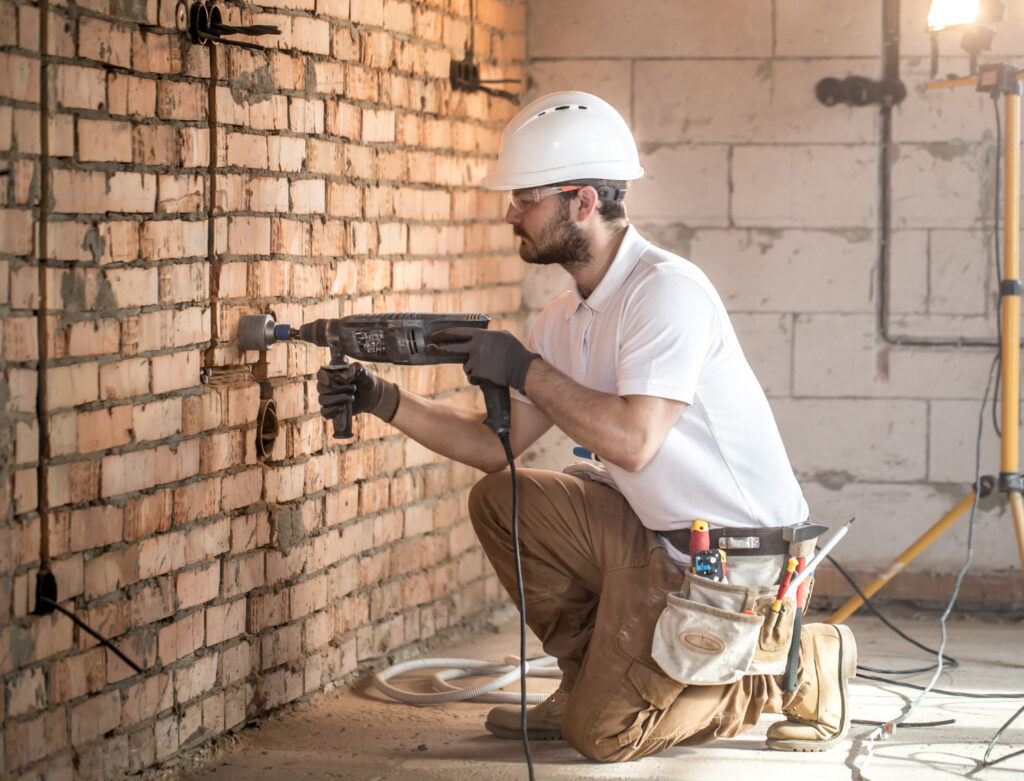
Hammell Homes has been finishing and renovating basements across the North Shore since 1986. The team has transformed cold, damp, neglected lower levels into home theaters, guest suites, playrooms, home offices, and legal in-law apartments. Rick Hammell and his crew understand the specific challenges that older Evanston and Skokie homes present underground, and they know how to solve them correctly the first time. If a finished basement has been on your list, explore what professional basement finishing and renovation looks like when it’s done right. Schedule your free consultation and let’s see what your basement could become.
Key Takeaways
- A professionally finished basement can add 10 to 20 percent to a home’s appraised value in the North Shore market, making it one of the highest-return renovation investments available.
- Moisture management is the single most critical factor in basement finishing. Any contractor who doesn’t address it before framing begins is setting the project up to fail.
- Older Evanston homes frequently have low ceiling heights, stone foundations, and aging mechanical systems that require specific expertise to work around without compromising the finished result.
- The function you choose for the space, home office, guest suite, family room, fitness area, or rental unit, should drive every design and material decision from day one.
Why Most Basement Projects Disappoint
Finished basements have a reputation problem, and it’s earned. Walk through enough older homes in Evanston and Skokie and you’ll find basements that were “finished” years ago and have since developed the moisture staining, musty odors, and bubbling drywall that tell the story of a job done without proper planning.
The failure point is almost always the same. Moisture wasn’t addressed before work began. Insulation was installed without a vapor barrier. Drywall touched concrete. Wood framing was set directly on a slab without a thermal break. These aren’t obscure mistakes. They’re the predictable result of cutting corners on the steps that don’t show in the finished photos.
A basement that fails due to moisture doesn’t just look bad. It creates air quality issues throughout the home, damages materials that were expensive to install, and creates remediation costs that often exceed what proper preparation would have cost in the first place.
What Evanston Basements Specifically Demand
Homes built before 1960 in Evanston and the surrounding North Shore communities were designed when basements were utility spaces, not living spaces. That original intent shows in a few specific ways.
Ceiling heights often run low, sometimes as tight as seven feet from slab to joists, and mechanical systems like ductwork, water heaters, and electrical panels need to be incorporated into the finished design rather than hidden or ignored. Foundation walls may be poured concrete, concrete block, or stone, each requiring a different approach to insulation and moisture management. Drain tile systems may be undersized or failing, and sump pump capacity matters enormously in this region’s clay-heavy soil.
None of this makes finishing impossible. It makes doing it correctly more important. A contractor who’s only worked on new construction or above-grade renovations is going to encounter these realities and either handle them improperly or pass the cost of surprises back to you mid-project.
Designing Your Basement Around How You Actually Live
The best basement renovations start with a clear answer to one question: what problem does this space solve for your family?
That question sounds simple, but the answer shapes everything. A home theater has different lighting requirements than a home office. A guest suite needs egress window compliance that a playroom doesn’t. A fitness room benefits from rubber flooring and higher ceilings that a media room doesn’t require. A legal accessory dwelling unit, increasingly valuable in Evanston’s rental market, needs its own entrance, kitchen provisions, and code compliance that most general contractors aren’t equipped to navigate.
Getting this clarity before design begins prevents the expensive mid-project pivots that drive up cost and extend timelines.
The Functions That Work Best in North Shore Basements
Home office or hybrid workspace. The demand for functional home workspace hasn’t slowed. A well-designed basement office with proper lighting, electrical capacity for equipment, and effective soundproofing is genuinely usable space, not a compromise.
Family room or media space. This is the most common basement use, and done well it becomes the most-used room in the house. Built-in shelving, recessed lighting, a wet bar area, and proper acoustic treatment make a meaningful difference between a space that feels finished and one that feels designed.
Guest suite. Adding a full bathroom and a legal bedroom in the basement transforms how you host. It also adds measurable appraisal value. Egress window requirements for legal sleeping spaces in Evanston need to be addressed at the design phase, not discovered after framing is complete. Our bathroom remodeling team integrates directly into basement projects that include a new bath, keeping coordination clean and timelines tight.
Fitness or hobby room. Rubber flooring, wall-mounted storage, and higher-capacity electrical for equipment make a basement gym significantly more functional than a corner of the garage. If the ceiling height allows it, a dedicated fitness space pays for itself in gym memberships within a few years.
How Hammell Homes Finishes a Basement the Right Way
The process reflects the philosophy: no shortcuts, no surprises, no steps skipped because they’re inconvenient.
Phase 1: Assessment and Moisture Testing
Before any design conversation happens, the baseline condition of the space gets evaluated. Moisture readings are taken at multiple points on the slab and walls. The existing drainage situation is assessed. Any signs of water intrusion, past or present, are identified and a remediation plan established before framing begins. This is non-negotiable.
Phase 2: Mechanical Coordination
Heating, cooling, plumbing, and electrical are planned around the intended layout before a single stud goes up. Low-ceiling areas caused by ductwork get addressed creatively with soffits, dropped ceilings, or mechanical relocation where feasible. This phase is where the design on paper meets the reality of what’s in the walls and ceiling.
Phase 3: Framing and Insulation
Walls are framed with a proper gap from the foundation to allow for drainage and prevent direct moisture transfer. Insulation is selected for the specific wall and ceiling conditions of that space, not whatever’s cheapest or easiest to install. A properly insulated basement is a noticeably more comfortable space year-round, which matters in a Chicago-area climate where basements trend cold from October through April.
Phase 4: Drywall, Flooring, and Finishes
This is where the transformation becomes visible. Drywall goes up, flooring is selected to suit the use case and moisture profile of the space, and the design details that separate a finished basement from a truly livable room start coming together. Recessed lighting, built-in features, trim work, and paint selections all happen here.
For projects where flooring consistency throughout the home matters, coordinating the basement floor finish with the main-level material is something the Hammell Homes team thinks through at the design stage. Our hardwood and vinyl floor installation experience applies directly to basement flooring selections, particularly luxury vinyl plank, which is the top-performing option for below-grade spaces.
The Transformation That Stays
D.W., an Evanston homeowner who worked with Hammell Homes, described the experience of Rick’s team this way: “Rick has been reliable and very professional. On time and high quality work. Very pleased and plan on using him again for upcoming home projects. He recently repaired and refinished our back deck and steps. He and his team did a great job.”
That reliability is consistent across project types. Whether the scope is a deck repair or a complete basement transformation, the standard doesn’t change.
JoAnn Heslup put it plainly after her renovation was complete: “My home looks amazing. I am very pleased with the professional quality of work that was provided.”
That satisfaction is the outcome of a process that respects both the homeowner’s investment and the craft itself. Hammell Homes was recognized for exactly this standard when the City of Evanston awarded the company its Beautification Award for Outstanding General Contractor of the Year, citing the complete gut rehabilitation of a historic property on Ashland Avenue. The same commitment to quality that earned that recognition goes into every basement project the team undertakes.
Your Next Step
Your basement is ready to become the most useful room in your home. It just needs the right team to get it there. Hammell Homes serves homeowners throughout Evanston, Skokie, Glenview, Northbrook, Wilmette and the broader North Shore with nearly four decades of proven results and the communication standards that make a renovation feel like a partnership rather than a gamble.
Schedule your free basement consultation with Hammell Homes and let’s design the room your home has been missing. Call (224) 347-1528 or email info@hammellhomes.com. We respond within one business day.
Frequently Asked Questions
How much does basement finishing cost in Evanston, IL?
A basic finish with drywall, flooring, lighting, and paint typically runs $25,000 to $45,000 for an average-sized basement. A full renovation with a bathroom addition, wet bar, built-ins, and high-end finishes can reach $70,000 to $100,000 or more. The variables that matter most are square footage, ceiling height challenges, moisture remediation needs, and the function of the finished space. Hammell Homes provides a clear, itemized estimate before any work begins.
How long does basement finishing take?
A straightforward finish without plumbing additions typically takes six to ten weeks. Projects that include a new bathroom, egress window installation, or significant mechanical work generally run ten to sixteen weeks. Timelines are established and communicated honestly at the outset, not revised repeatedly after work begins.
Do I need permits to finish my basement in Evanston?
Yes. Basement finishing that includes electrical, plumbing, egress windows, or framing requires permits through the City of Evanston. Hammell Homes manages the permitting process as a licensed general contractor, ensuring every phase of the project is inspected and code-compliant.
What’s the best flooring for a finished basement?
Luxury vinyl plank is the top choice for most below-grade applications. It’s fully waterproof, dimensionally stable in varying temperatures, comfortable underfoot, and available in styles that convincingly replicate hardwood. Engineered hardwood can work in basements with well-controlled moisture levels. Carpet is an option for dedicated bedrooms or media rooms where comfort takes priority over moisture resistance.
How do you handle low ceilings in older Evanston basements?
Low ceilings require creative planning at the design phase. Ductwork can sometimes be rerouted to gain height in key areas. Soffits can box in unavoidable obstructions while maintaining ceiling height in the primary living space. In some cases, spray foam insulation against the foundation wall eliminates the need for a furred-out framed wall, recovering several inches of floor space. Every basement presents its own set of constraints, and the Hammell Homes team assesses these during the initial walkthrough.
Can a finished Evanston basement be used as a rental unit?
Potentially, yes, but it requires careful planning. A legal accessory dwelling unit in Evanston must meet specific code requirements including a separate entrance, proper egress from sleeping areas, kitchen provisions, and electrical capacity. These are buildable requirements, but they need to be designed for from day one. Hammell Homes can walk through what compliance looks like for your specific space during the consultation.
About the Author
The Hammell Homes Editorial Team represents nearly four decades of basement finishing, home renovation, and handyman expertise across Evanston and the North Shore of Illinois. Founder Rick Hammell established the company in 1986 on the principle that every client deserves honest work, clear communication, and craftsmanship that lasts. Hammell Homes holds General Contractor License No. 09LICR-0564, carries full bonding and insurance, and has earned BBB accreditation and HomeAdvisor Elite Service Pro recognition. The company was honored with the City of Evanston Beautification Award for Outstanding General Contractor of the Year. Contact the team at info@hammellhomes.com or (224) 347-1528.
